Cables

Extreme Efficiency for Lightweight Long-Span Structures

Structural cable systems are among the most efficient load-carrying technologies ever developed. From the pioneering work of innovators such as Johan Roebling, Frei Otto, Ove Arup, and Ted Happold to today’s stadiums, transportation hubs, and large-span enclosures, cables continue to enable extraordinary architecture with minimal material and maximum efficiency.

There is a simple reason cables became the preferred solution for long-span bridges and roofs: they achieve remarkable spans using a fraction of the material required by conventional structural systems. Today, cable systems can form complex geometries including cable nets, tensegrity structures, cable domes, hyperbolic paraboloids, anticlastic surfaces, and warped conoids.

Enclos Tensile Structures specializes in the engineering, fabrication, and installation of cable-supported structures where performance, efficiency, and architectural expression are equally important.
0%
the weight of comparable structural steel
0x
higher tensile capacity than a steel bar of the same diameter
0+
years of expected service life

Why Cables?

Structural Efficiency & Long Span

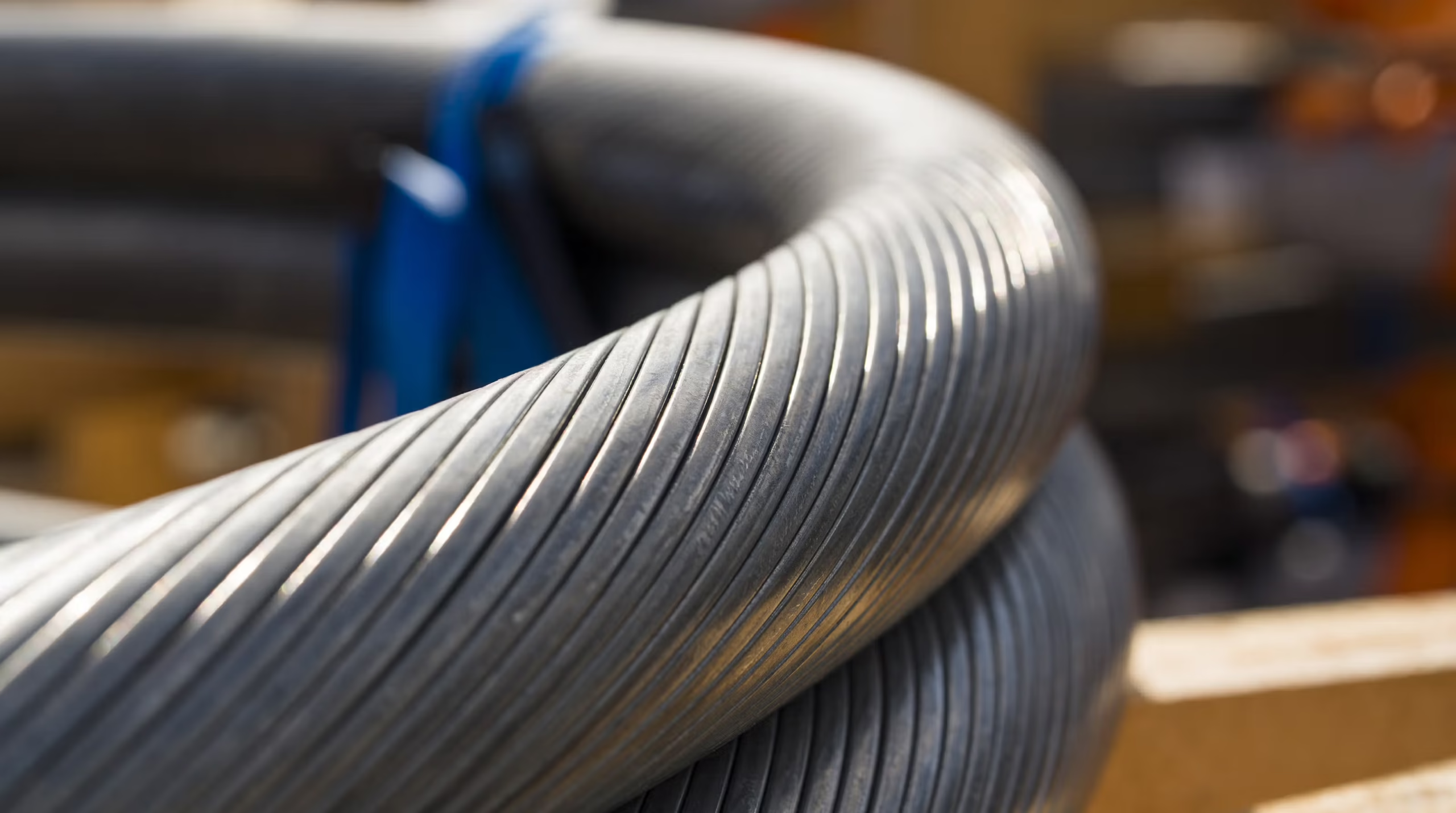
Structural cable used in modern cable systems consists of multiple high-strength steel wires stranded together to create an exceptionally efficient load-carrying element. Fabricated to precise lengths and fitted with engineered sockets, cable assemblies arrive on site ready for installation and tensioning.

Cables can carry approximately three times the tensile force of a steel bar of the same diameter while weighing only a fraction as much. Multiple cables can then be combined into trusses, cable nets, cable domes, and other systems capable of spanning extraordinary distances.

This efficiency inspired Frei Otto’s definition of lightweight structures: “How to build more with less.”

Some cable-supported enclosures have dead loads as low as 7 pounds per square foot, compared with up to 120 pounds per square foot for conventional steel structures.

The result is longer spans, column-free environments, fewer structural elements, and more efficient designs, especially when combined with lightweight cladding systems such as PTFE membrane and ETFE film.

Minimal Visual Impact

Structural systems are often necessary but visually intrusive. Cable systems offer a unique solution by delivering substantial load-carrying capacity through elements that can appear almost invisible.

This advantage becomes especially apparent in cable-supported facades, roof systems, and glazing applications, where the supporting cables are often less visible than the joints between adjacent glass panels.

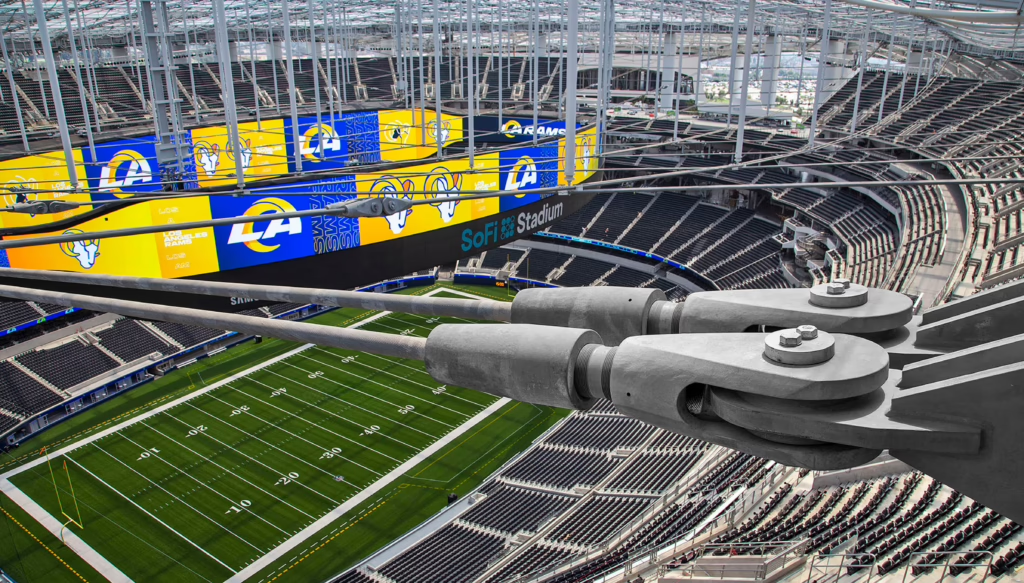
Cable sockets and anchorage systems are engineered to efficiently transfer forces while remaining as compact as possible. In many applications, these connections can be concealed entirely from view.

ETS works closely with architects and designers to integrate cable systems that support the structure while preserving the architectural vision.

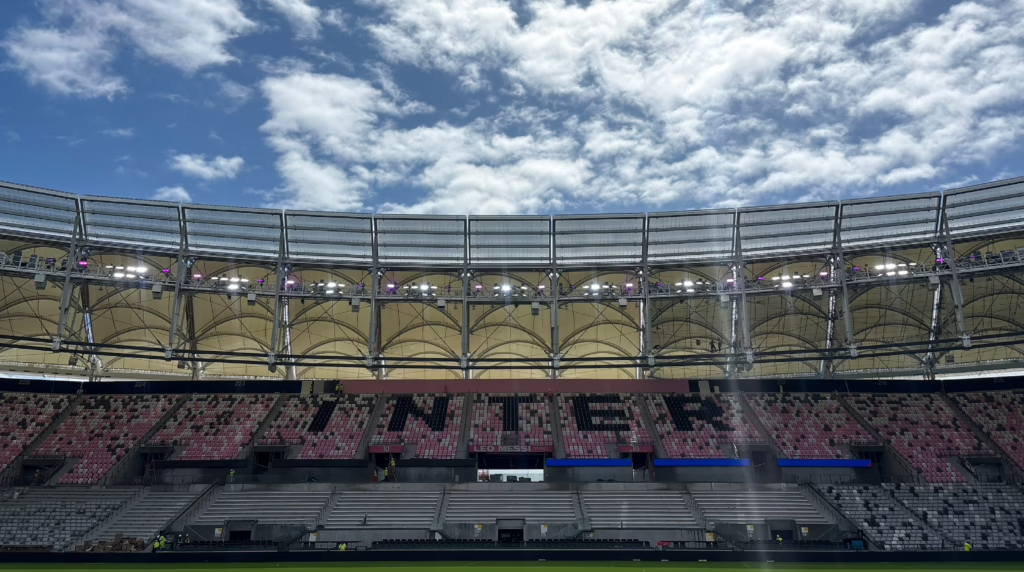
Daytime view of the spectator canopy at Miami Freedom Park’s Nu Stadium in Miami, Florida.

Nu Stadium at Miami Freedom Park

Miami, FL

Project Details

Adaptable System Design

Cable systems can be configured in numerous ways depending on project requirements, including:

  • Single cables for hangers, stays, and tension ties
  • Two-dimensional cable trusses for long-span applications
  • Multiple cables with connecting compression struts
  • Cable nets and cable dome roofs
  • Retractable roof support systems
  • Tensegrity and specialty lightweight structures

When combined with tension membrane and film technologies, cable systems unlock structural solutions for complex architectural forms that would be difficult or impossible to achieve using conventional construction methods.

Life Span & Environmental Performance

Wires for modern structural cables are produced from the highest-grade steel, and each wire is coated with high-quality corrosion protection before the standing process. The outer-layer wires are coated with an active corrosion protection system, which further protects the cable steel wires from environmental exposure.

In fact, the steel cables used in our structures were developed for underwater ties on deep-sea drilling platforms, which is the ultimate test of their corrosion resistance. Therefore, the service life of steel cables in structures is expected to be 50+ years, matching the lifespan of stainless-steel cables for corrosion resistance.

Regular site inspections and proper maintenance programs, offered by ETS, can extend cable lifespan even further.

Integrated System Structures

Tension forces in a structural cable need to be resolved by opposite forces in any structure. Any load applied to a cable, i.e., from membrane cladding, increases the tension loads in it. The balance between tension and compression forces is the basis of any workable structure. Therefore, any cable system needs to be complemented by other structural members that resolve the tensile forces in the cables. Traditionally, it would be structural steel or reinforced concrete to which cable systems connect during the pre-tensioning process.

The final product is a fully integrated structural system that requires careful geometric modeling and structural analysis, including large-deformation calculations.

ETS offers design assistance in this analysis starting at the very early stage of the design process.

Applications

Cable Systems are widely used across high-performance architectural and engineering applications, including:

  • Stadium and arena roofs
  • Cable-stayed facades
  • Airport terminals and transportation hubs
  • Convention centers and exhibition halls
  • Bridges and pedestrian walkways
  • Long span trusses
  • Canopies, tensegrity systems and other feature structures

The combination of tensile strength, practically unlimited length, flexibility, and adaptability of structural steel makes cable systems particularly well-suited for projects requiring large spans, tight budgets, quick erection, and minimal visual impact of the supporting structure.

A Smarter Alternative to Steel

For projects requiring long spans and column-free structures, lightweight, low-cost, and free of the limitations of traditional structural technology, cable systems offer a compelling alternative. Cables enable:

  • Reduced structural demand
  • Greater design freedom
  • Unparalleled load-bearing capacity
  • Long service life
  • Lower lifecycle costs
  • Erection speed and efficiency
  • Compatibility with lightweight cladding systems