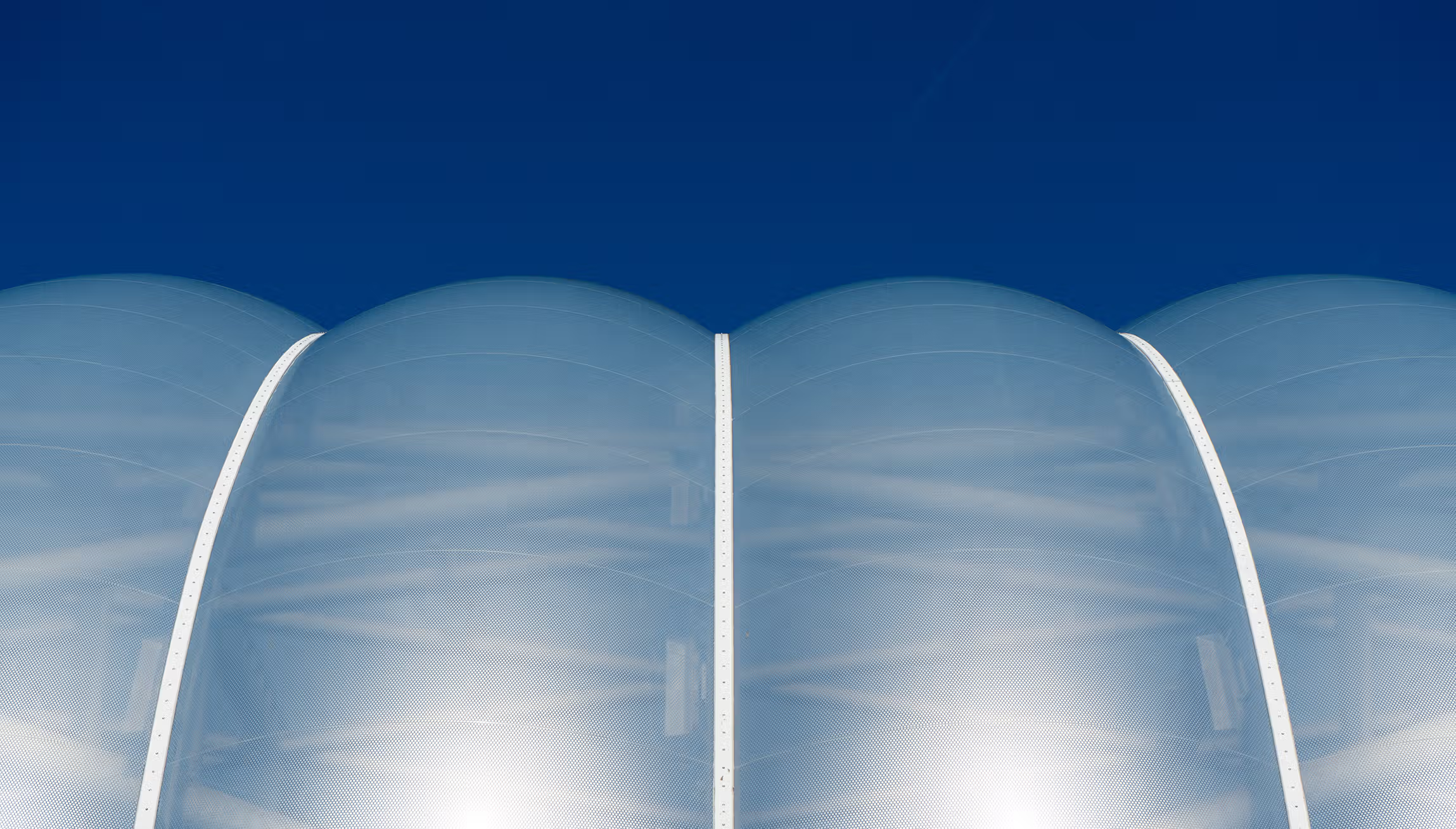

ETFE (Ethylene Tetrafluoroethylene), was first developed by DuPont in the 1940s. ETFE offered exceptional resistance to abrasion, radiation, corrosion, and extreme temperatures. These properties made it an ideal material for industrial insulation, wiring, liners, and chemical processing applications. Interest in ETFE expanded in the 1970s as manufacturing advancements allowed the material to be extruded into thin transparent films suitable for architectural applications and used as a replacement for glass in greenhouses and solar thermal collectors.
ETFE’s first major architectural application occurred in 1982, when 3-layer ETFE cushions were used to replace a failing cable supported membrane at the Mangrove Hall, part of Burger’s Zoo in Arnhem in the Netherlands. Due to its success, the zoo commissioned two additional ETFE covered buildings, completed in the late 80’s and early 90’s.
Other notable early projects include the Eden Project in England, Allianz Arena in Germany, and Beijing’s National Aquatics Center (“Water Cube”) in China, which gained acclaim during the 2008 Olympics. It continues to be used across a wide range of architectural applications, from large-scale stadiums and arenas to transportation hubs, atriums, canopies, zoological facilities, and civic structures.
ETFE Properties
In addition to its high elongation capacity and tear resistance, ETFE Film is chemically inert and due to its stability it can withstand exposure to a wide range of chemicals. Combined with its UV stability, ETFE offers a long service life with minimal change to its appearance or physical properties over time. It has anti-stick properties, making it largely self-cleaning. ETFE is highly resistant to tearing and surface damage, and proper design can allow ETFE to withstand hail strikes and high wind loads. It maintains its physical properties in both sub-zero and high-temperature environments. It is also 100% recyclable.
ETFE vs. Glass
While often manufactured to be extremely transparent, ETFE can also be made with various levels of opacity and color or frit to achieve a specific aesthetic. Transparent ETFE offers unique application options compared to glass, as it typically weighs between 1% and 10% of a comparable glass assembly, meaning much less structural support is needed, and its unique properties make it a viable transparent material for lightweight tensile membrane structures.

ETFE canopies provide the transparency of glass at a fraction of the weight, allowing for longer spans, reduced structural steel, and visually lightweight designs.
ETFE Cushion Systems
ETFE can be used as in both single-layer applications and multi-layer cushion systems. ETFE cushions are pneumatically inflated, creating outward pressure that stabilizes the system and increases rigidity. The multiple layers also grant improved thermal performance.
ETFE Fire Performance
ETFE has low flammability and self-extinguishing properties, and is fire rated to ASTM E84 Class A. In a fire, at very elevated temperatures, the membrane retracts and melts away without producing flaming droplets and with minimal smoke generation. By pulling away from the plume, the opening allows effective venting of fire and excess temperature.
ETFE Production
Resin Production
ETFE is produced initially as a resin. Primary producers for ETFE film are AGC, based in Japan, and Nowofol, based in Germany.
Extrusion
For high-quality film used in architectural projects, resin is heated and passed between rollers, extruding the film at a set width, normally 1.25 to 1.5 meters. The length of the roll varies by manufacturer and thickness, but is generally greater than 100 meters. As the film cools, it is wound onto tubes for storage and transportation.
Film Thickness
Typical architectural ETFE film thickness ranges from 100 and 400 microns, though greater and less thick films exist. The required thickness is determined by the anticipated loads, span, and application.
Fritting and Surface Treatments
Variations in color, transparency, translucency / opacity, and matte or shiny surface are also possible.
After extrusion, printed patterns commonly referred to as frit may be added. The frit itself is a fluoropolymer ink, most commonly an opaque silver pigment to increase the solar reflectance. ETFE producers can add this frit in a variety of standard patterns and coverage percentages. To bond the ink to the film, special treatments (chemical, electrical or radiation-based) that temporarily alter the film’s surface are employed. Printing it typically held back approximately 50mm from the long edges of the film roll to allow for joining rolls together during fabrication, a process known as welding.
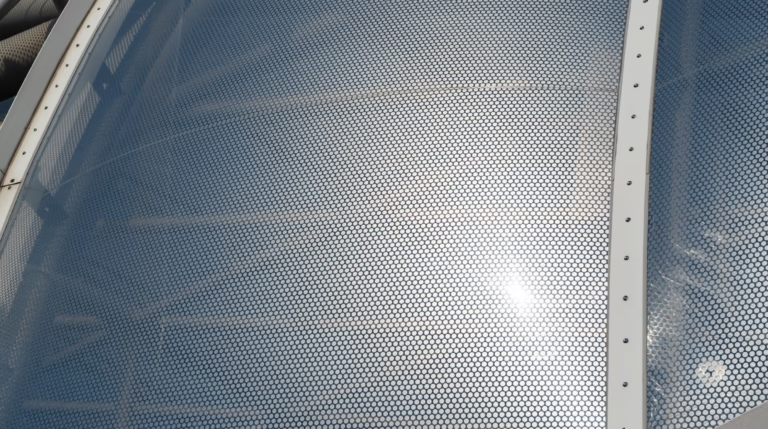
Printed frit patterns can be applied to ETFE film to control solar heat gain, diffuse daylight, and create unique visual effects while maintaining transparency.
ETFE Fabrication and Installation
ETFE fabrication involves transforming rolled film into finished architectural assemblies and adding additional features, such as the perimeter keder edge and air valves. Each layer of the ETFE must be cut to its precise size and shape, while considering the three dimensional shape of any cushion application. Cutting patterns are created to ensure the desired end form is achieved, and the shape itself cut using a blade.
For applications greater than the width of a single roll, ETFE can be welded together across seams. Similarly, welds are used to create multi-layer cushion assemblies by bonding layers together at their edges. Welding is performed under precisely controlled temperature and pressure for a specific duration, with no added material or chemical treatment. Weld seams are typically approximately 5 mm wide and may be visible under certain lighting conditions. The welds are created with either a drop bar, for straight segments, or a rolling wheel that can accommodate straight or curved seams.
The keder edge is formed by wrapping and welding the ETFE film to create a pocket for a synthetic rod to be inserted. Air valves are added to the cushion assembly, and the completed assembly is folded to avoid wrinkling and prepared for shipping. If cable pockets are required, these are also added.
The fabricated ETFE arrives on site folded in a crate. The panels are typically clamped along their perimeter via the keder and an aluminum extrusion. The edges are pulled into the extrusion, which can also be designed to manage water runoff, commonly referred to as a gutter. Depending on the design, gaskets and a metal clamp bar may be added to further mitigate water intrusion.
For a single layer application and in certain areas where snow accumulation may occur, small diameter stainless steel cables are added. For cushions, this is to reinforce the membrane in the event that a cushion may temporarily invert, allowing the snow to melt or slide without imposing a long-term load that could cause excessive deformations. When the snow load is no longer present, the cushion reinflates as the air pushes between the layers. For a single-layer ETFE application, the cables can be used for ponding only, in which case they pass beneath the membrane and do not impact it unless there is a downward-acting load, or they can be pocketed. A pocketed cable can be designed to resist upward forces, in addition to the downward forces on the membrane. Cable size, spacing and locations are largely determined by roof geometry and the building-specific snow, wind and rain loads expected.
While ETFE is durable and capable of supporting temporary loads, it is not recommended to walk on it. Therefore, it is important to design walkable access into the design should maintenance access require it.
After perimeter clamping is completed, the cushion valves can be connected to the air handling units, which push air through the cushions at a controlled rate. The cushions will inflate to a size based on the amount of air passing through the volume. [It is possible to temporarily increase the flow during a high load event, such as a major storm, to grant the cushion more rigidity.] Over the first year, the steady internal pressure of the air inside the cushion will slightly increase its size until it reaches equilibrium.
ETFE is naturally self-cleaning and difficult for birds to grip or perch upon. However, the perimeter clamping extrusions may warrant some form of bird deterrence, normally achieved through small-diameter wires attached to upstands fastened to the top of the extrusion.
ETFE Cushions and Inflation Units
Air handling equipment (blowers) are used to continually pass air through the ETFE assembly, known as a cushion. This equipment is typically located on the roof or in catwalks nearby, requiring power to operate. The cushions are inflated, and rather than continuously cycling large volumes of air through the system, the blowers maintain a steady pressure inside the cushion, resulting in low power consumption. Inflation units typically have two blowers, with only one in use at a time. Should a blower fail, the other can maintain inflation. In the event a cushion fails, due to adverse weather conditions or excessive load, both fans can run to maintain a steady pressure and reinflate. To mitigate the risk of cushion failure, it is common to install small-diameter cable supports, often referred to as ponding cables, under cushion assemblies. These cables support the membrane, ensuring positive drainage and allowing time for the cushion to reinflate.
Sensors for weather, temperature, pressure, and inflation unit monitoring are typically connected back to a Building Management System (BMS), allowing the building’s operation staff to monitor the status of the cushions remotely and receive warning to any issues. While the air supply cabinets are compact (approx. 3′ x 6′), additional space and access for regular service is required.
ETFE Maintenance and Service Life
Due to its chemical stability and weather resistance, properly designed and maintained ETFE systems can achieve service lives of 50 years or more. Long term weathering tests have shown minimal impact to the properties and performance of ETFE. Regular visual inspection of joints, clamping and seals are recommended.
While ETFE naturally resists dirt, pollutants, or other residue sticking to its surface, it is easy to clean without relying on harsh chemicals. Dirt and debris will typically wash away naturally with rainfall, and if needed, cleaning with mild detergents can be done.
In the event that ETFE is punctured, either during construction or during building operation, field patches can be made with specialized ETFE repair tape. While not as strong as an ETFE weld, the adhesive strength is sufficient for small sections that require patching. This high adhesive tape is made with ETFE, making small repairs possible in the field with very minimal visual impact. In the rare event of a larger tear puncture, field welding a patch or replacement of the entire panel may be needed.
Learn more about ETFE inspections, maintenance, repair, and warranty support on our Service page.